A Forgiving Loaf Cake for Overripe Bananas
A simple, one-bowl loaf that makes good use of spotty bananas. The recipe is written in prose with a clear ingredient list and a few easy variations.
Spotted, soft, even a little leaky: bananas at this stage are exactly what a loaf cake wants. They're sweeter, they mash easily, and they keep the crumb moist. This is a forgiving recipe, so a little extra mashing or a slightly different pan won't ruin it.
Ingredients you probably already own
You likely have everything in the kitchen already. For one standard loaf pan, gather:
- 3 very ripe bananas, about 1 1/2 cups mashed
- 1/3 cup melted butter or a neutral oil
- 3/4 cup sugar, white or brown
- 1 egg
- 1 teaspoon vanilla, if you have it
- 1 teaspoon baking soda
- 1/4 teaspoon salt
- 1 1/2 cups all-purpose flour
Brown sugar gives a deeper, more caramel-like flavor, but white works fine. If your bananas are on the small side, use an extra one rather than trying to stretch the batter.
Mashing and mixing without overdoing it
Heat the oven to 350°F and grease a loaf pan, or line it with parchment so the loaf lifts out easily.
- Mash the bananas in a large bowl with a fork. Leave a few small lumps for texture.
- Stir in the melted butter, then the sugar, egg and vanilla.
- Sprinkle the baking soda and salt over the top and stir them in.
- Add the flour and fold gently, just until you no longer see dry streaks.
- Scrape the batter into the pan and smooth the top.
The one real rule is to stop mixing once the flour disappears. Beating the batter after that develops the flour's gluten and can make the loaf tough and rubbery. A few small lumps of flour will bake out.
How to tell the loaf is done
Start checking at about 50 minutes, though many loaves need closer to an hour. Ovens and pans vary, and very ripe bananas add extra moisture.
Look for these signs:
- The top is deep golden and springs back lightly when pressed.
- The edges have just begun to pull away from the pan.
- A toothpick pushed into the center comes out clean or with a few moist crumbs. Wet batter on the pick means it needs more time.
If the top is browning faster than the middle is baking, lay a loose piece of foil over it and keep going. Because banana batter is dense, the center is always the last part to set.
Swaps: nuts, chocolate, spices, whole-grain flour
This loaf takes well to whatever is in your pantry.
- Nuts: Fold in about 1/2 cup of chopped walnuts or pecans. Toasting them first in a dry pan for a few minutes brings out more flavor.
- Chocolate: Chopped chocolate or chocolate chips, about 1/2 cup, make a good addition. Toss them in a spoonful of the flour first so they don't all sink.
- Spices: A teaspoon of cinnamon is classic. A pinch of nutmeg, ginger or cardamom works too.
- Whole-grain flour: Replace up to half the all-purpose flour with whole wheat. The loaf will be a little denser and nuttier. If the batter seems stiff, stir in a tablespoon or two of milk.
- Oil instead of butter: Oil makes a slightly moister loaf that stays soft longer. Butter gives a richer flavor.
Cooling, slicing and storing
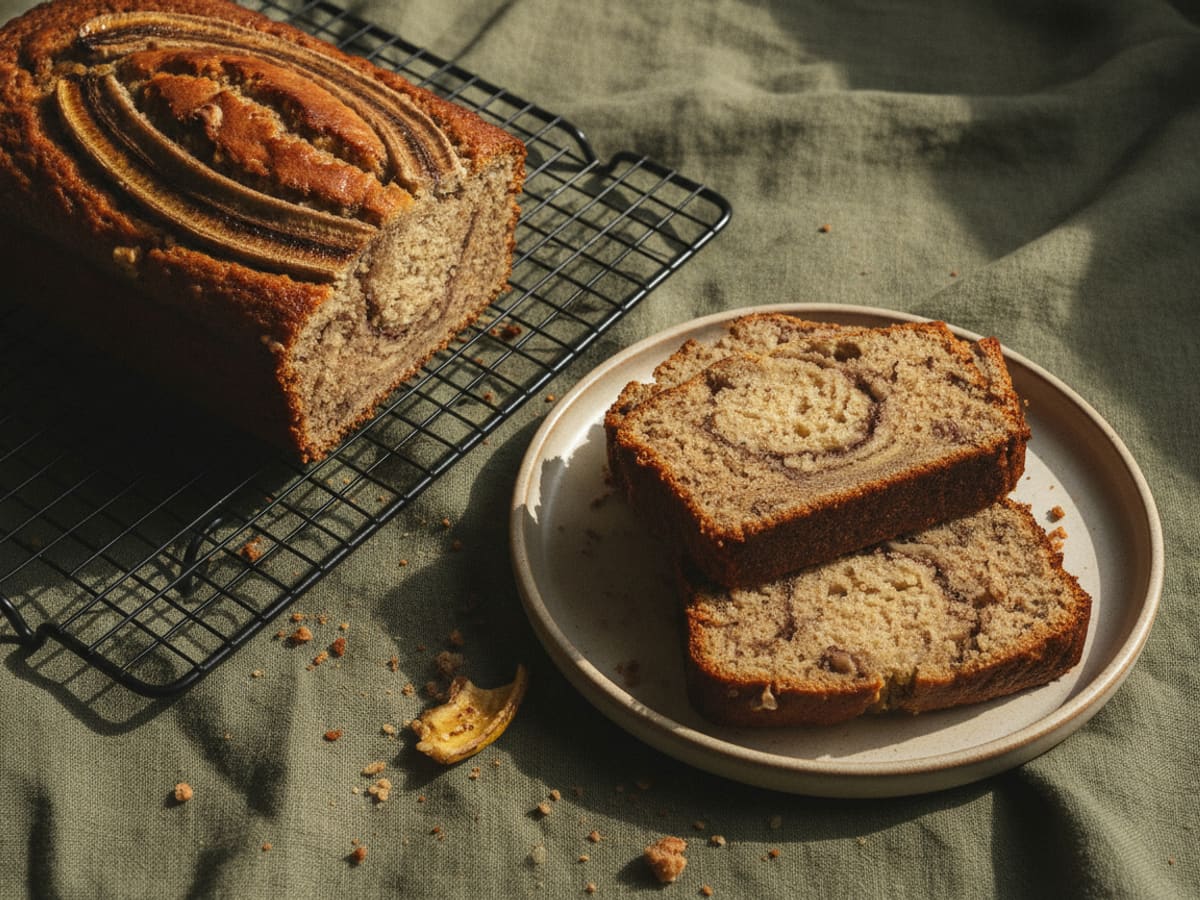
Let the loaf rest in the pan for about ten minutes, then lift it out onto a rack. Try to wait until it's mostly cool before slicing. Warm banana bread is tender and tends to crumble, and a serrated knife with a gentle sawing motion gives the cleanest slices.
Once completely cool, wrap the loaf well or keep it in an airtight container. It will stay good on the counter for a couple of days. In a warm kitchen, or if your loaf has a lot of add-ins, keep it in the refrigerator and let slices come to room temperature before eating.
Freezing slices for later
A whole loaf is a lot for one household, and slices freeze better than most baked goods.
- Let the loaf cool completely, then cut it into slices.
- Wrap each slice in plastic wrap or parchment, or stack them with a square of parchment between each one.
- Put the