Pantry Pasta That Doesn't Feel Like Giving Up
A dinner built from dried pasta, a can of tomatoes, garlic and a few extras, with a short ingredient list and a method that tastes like you planned it.
You open the fridge, see a lemon and half a jar of mustard, and feel the pull of takeout. Hold off. If you have dry pasta and a few humble things in the cupboard, you can have a good dinner on the table in about the time it takes to boil water.
The trick is to treat pasta as a real dish, not a fallback. A little technique does most of the work.
The pantry shortlist
You don't need much. Most of these keep for months, so you probably have several already:
- Dry pasta, any shape. Long strands suit oily or garlicky sauces, and short shapes catch chunky ones.
- Olive oil or another cooking oil, plus butter if you have it.
- Garlic and onions, fresh or from the freezer.
- Canned tomatoes, whole or crushed.
- Canned beans or chickpeas.
- Canned fish, such as tuna, sardines or anchovies.
- Something salty and sharp: hard cheese, capers, olives or a splash of vinegar.
- Dried chili flakes, dried herbs and black pepper.
- Frozen vegetables, especially spinach or peas.
If you have pasta, fat, something savory and something acidic, you have dinner. Everything else is a bonus.
Building the sauce while the water boils
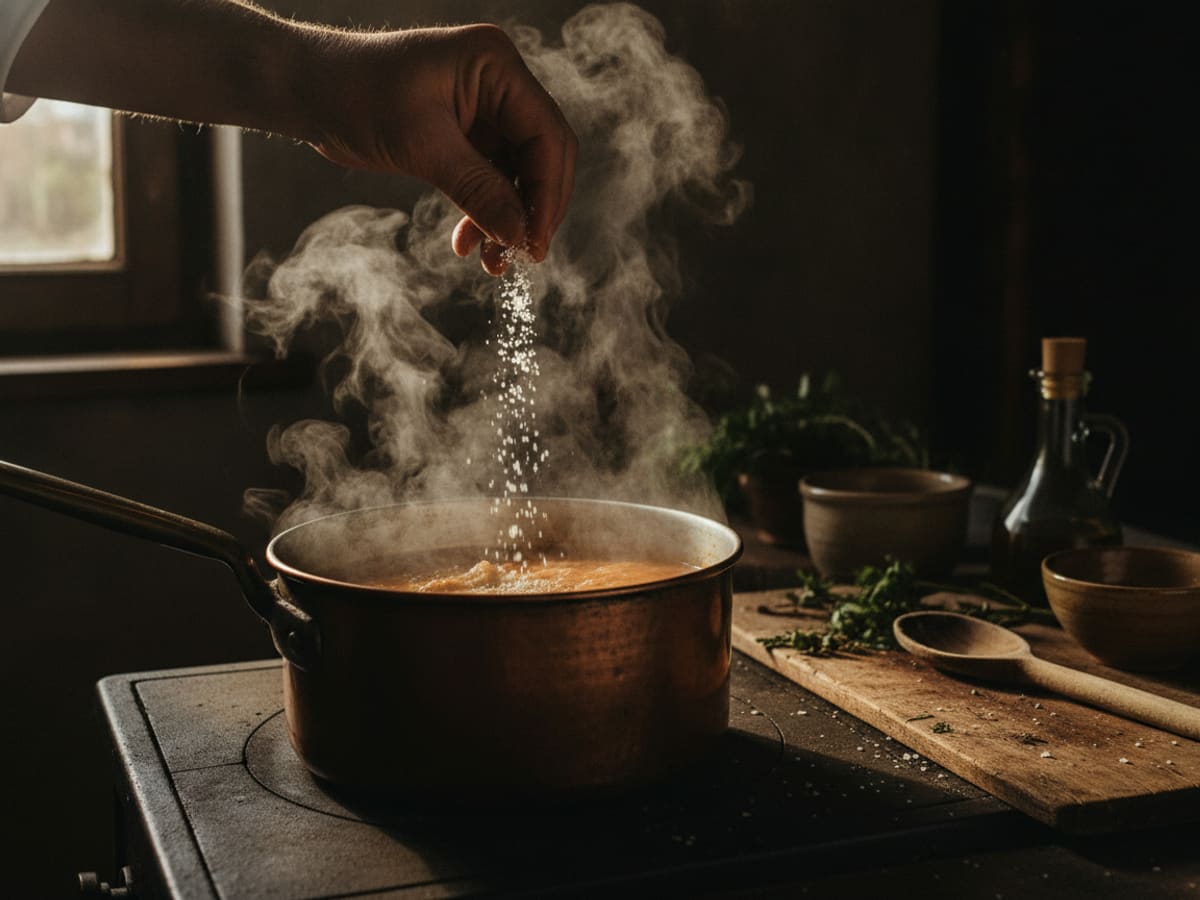
Put a big pot of water on first, and salt it generously once it boils. The water should taste pleasantly seasoned, because that is your only chance to season the pasta itself.
While you wait, start the sauce in a wide skillet. Warm a few spoonfuls of oil over medium heat and add thinly sliced garlic or chopped onion. Cook gently until soft and fragrant. Garlic goes from golden to bitter quickly, so keep an eye on it.
Then pick a direction:
- Tomato: add canned tomatoes, a pinch of salt and chili flakes, and let them simmer until thick.
- Lemony: skip the tomatoes and add lemon juice and zest near the end, with plenty of black pepper.
- Pantry puttanesca style: stir in chopped olives, capers and a little anchovy, which melts into the oil and adds depth rather than a fishy taste.
Whichever you choose, keep the heat low and let the sauce wait for the pasta, not the other way around.
Finishing the pasta in the pan
This is the step that separates a plate of noodles with sauce on top from a dish that feels cohesive.
- Cook the pasta until it is just shy of done. Taste a piece a minute or two before the package suggests. It should still have a little bite.
- Scoop out a mug of the cooking water before you drain. It is cloudy with starch, and that's what makes sauce cling.
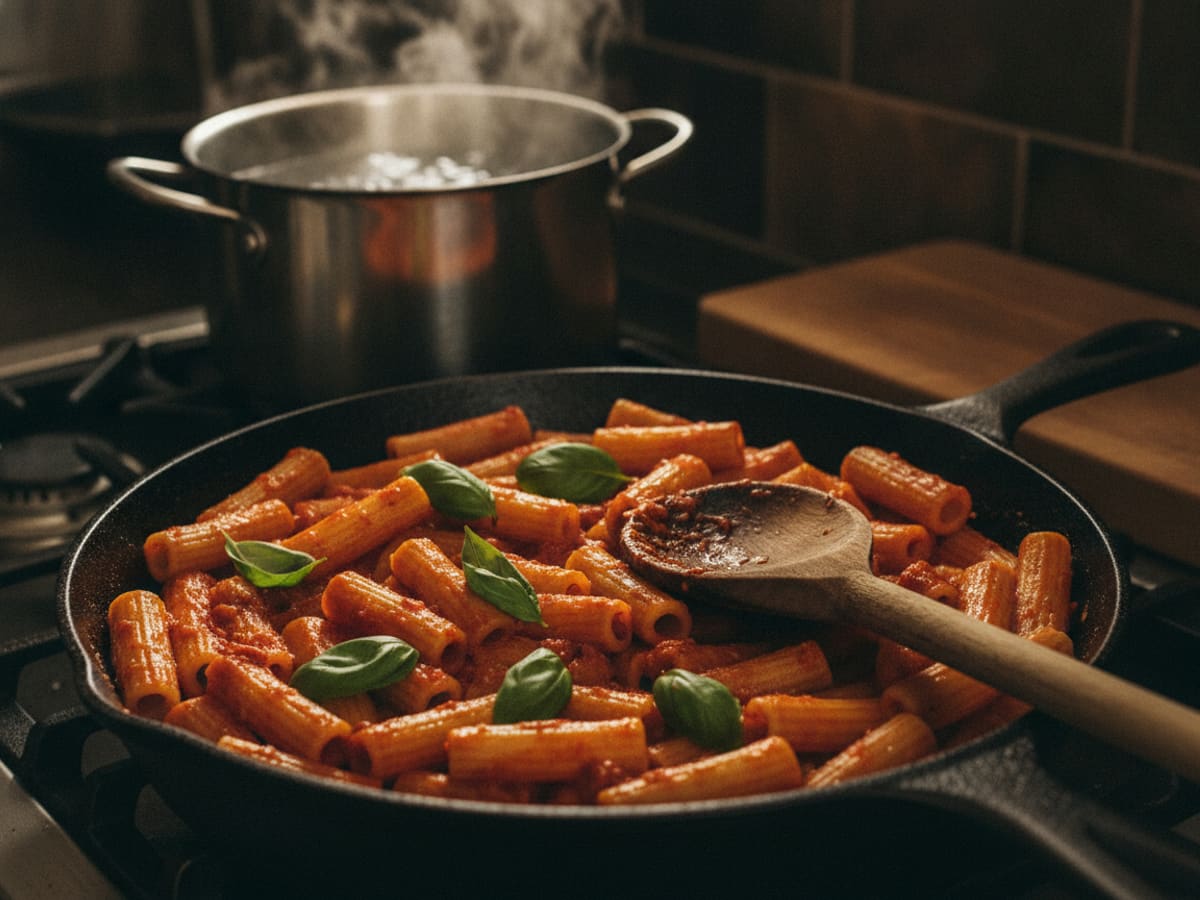
- Move the drained pasta straight into the skillet with the sauce.
- Add a splash of the cooking water and stir or toss over medium heat for a minute or two, until the sauce turns glossy and coats every piece.
- Add more water a spoonful at a time if it looks tight or dry. Taste, then adjust the salt, pepper and acid.
Add-ins: beans, greens, canned fish, cheese
This is where a thin pantry meal becomes a satisfying one. Choose one or two, not all of them.
Beans and chickpeas: Drain and rinse them, then add them to the skillet a few minutes before the pasta joins. Let a few get crisp in the oil first if you have the patience. They bring body and make the dish feel more filling.
Greens: Frozen spinach can go straight into the sauce and cook down. Fresh greens that are past their best, like wilting kale or arugula, can be chopped and stirred in at the end. Peas work the same way.
Canned fish: Tuna folds in easily at the last minute, so you don't cook it further. Sardines break into rich, savory pieces if you stir them into warm garlic and oil. Drain or keep a little of the oil, depending on how rich you want the sauce.
Cheese: Hard cheese grated over the top adds salt and savoriness. Even the dry heel of a block is worth using. Stir some into the pan off the heat so it melts rather than clumps.
Making it feel like a meal
A few small gestures make a plain bowl look and taste intentional.
Serve the pasta in warm bowls rather than eating it out of the pan. Finish with a drizzle of good oil, a crack of pepper and a little grated cheese. Add something fresh if you can, such as a squeeze of lemon, torn herbs from a windowsill or a handful of raw greens on the side.
Texture matters too. Toasted breadcrumbs, made by frying stale bread crumbs in oil until golden, give you crunch that makes the dish feel finished. Chopped nuts work as well.
If you have an extra five minutes, a simple salad of whatever is left in the crisper, dressed with oil and vinegar, turns pasta into a proper dinner.
Restocking the basics
When the cupboard starts looking sparse, you don't need a big shop. A short list keeps this dinner always within reach:
- One or two shapes of dry p