Prep Components, Not Whole Meals
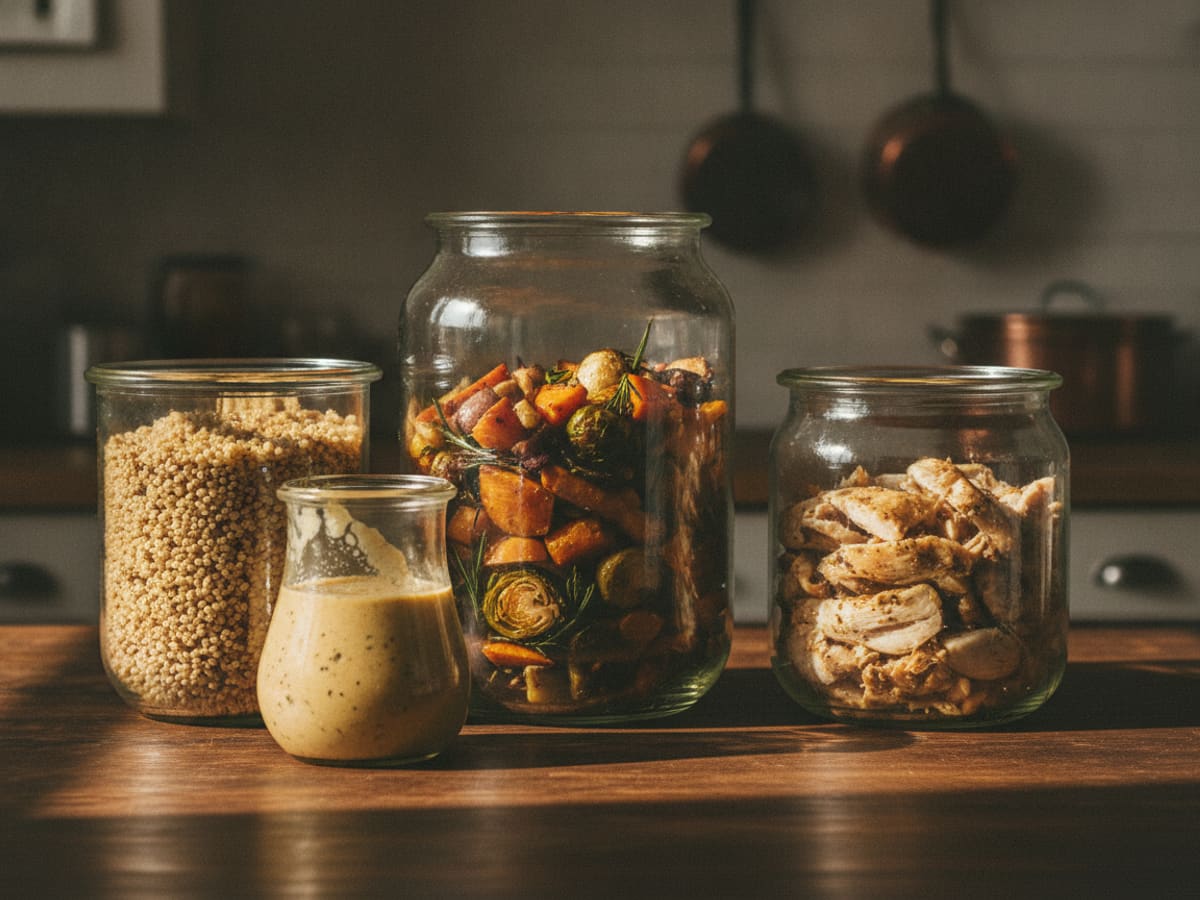
Instead of cooking five identical lunches, prepare a few building blocks you can mix and match. It keeps meals interesting and your fridge more flexible.
If you've ever packed five identical containers on a Sunday and felt sick of them by Wednesday, the problem wasn't meal prep. It was prepping finished meals. The fix is to cook parts of dinner and assemble them differently each night.
Why components beat full meals
A finished meal has one flavor and one texture, and it's stuck that way. Reheated chicken in a creamy sauce over rice is the same dinner on day four as it was on day one.
Components stay flexible. A pot of rice can go under a stir-fry, into a burrito or beside a fried egg. Roasted vegetables can be a side, a taco filling or part of a grain bowl. You decide what you're in the mood for when you're hungry, and that's what keeps the food from getting boring.
Components also cut waste. When you have cooked building blocks on hand, you're less likely to order takeout and let fresh groceries wilt.
Choosing a grain, a protein, a vegetable and a sauce
Pick one from each group, then add a second sauce if you want more variety. The sauce does the most work in making meals feel different.
- Grain: rice, quinoa, farro, pasta or small potatoes. Choose something that reheats well and isn't gummy the next day.
- Protein: roasted chicken thighs, baked tofu, seasoned ground turkey, hard-boiled eggs or a pot of beans. Pick something that tastes good both hot and cold.
- Vegetable: something sturdy that roasts well, like broccoli, carrots, sweet potato, cauliflower or peppers. Keep a bag of something fresh and raw, like cabbage or cucumbers, for crunch.
- Sauce: a sesame-soy dressing, a yogurt-and-herb sauce, a simple vinaigrette or a jar of salsa. Sauces are cheap, quick and change everything.
A one-hour prep order that makes sense
The trick is to start the slowest, most hands-off items first, then fill the gaps with quick tasks.
- Heat the oven and start the grain. Get the oven going, then put the rice or other grain on the stove or in a cooker.
- Chop the vegetables and get them on a sheet pan. Toss with oil, salt and pepper, and put them in the oven.
- Season the protein and add it to a second pan. Chicken thighs or tofu can roast alongside the vegetables if both fit. Otherwise, brown ground meat on the stove.
- Make the sauces while everything cooks. Whisk a dressing or stir herbs into yogurt. This takes just a few minutes.
- Wash and cut raw vegetables. Slice cabbage, cucumbers or greens for fresh crunch.
- Cool everything, then pack it up. Spread hot food out so it cools quickly, then store each component in its own container.
Storing food safely using official guidance
Cooked food needs a little care. The USDA advises refrigerating cooked food within two hours of cooking, and keeping your refrigerator at 40°F or below. Shallow containers help food cool faster than a deep pot.
The USDA also says most leftovers are best eaten within three to four days. If you won't get to something by then, freeze it. Cooked grains, beans and many proteins freeze well. Freeze them in portions you can thaw as needed.
When you reheat, the USDA recommends bringing leftovers to 165°F, checked with a food thermometer. Thaw frozen food in the refrigerator, in cold water or in the microwave, not on the counter.
Plan the week around this window. Eat the most perishable components, like chicken, early in the week. Put a portion in the freezer on day one for later.
Three different dinners from the same building blocks
Say you made rice, roasted chicken thighs, roasted broccoli and carrots, a sesame-soy dressing and a yogurt-herb sauce. Here's how that plays out.
First night: a rice bowl. Warm the rice, top with sliced chicken and vegetables, and drizzle with the sesame-soy dressing. Add some raw cabbage on top.
Second night: tucked into tortillas or flatbread. Chop the chicken and vegetables, warm them, and spoon on the yogurt-herb sauce. Add something fresh, like sliced cucumber.
Third night: fried rice. Heat a little oil in a skillet, add cold rice, chopped vegetables and chicken, then push it aside and scramble an egg in the pan. Finish with a splash of the soy dressing.
Same ingredients, three different dinners. Swap the grain for pasta and the sauce for a vinaigrette, and you have a fourth.
When to skip prep entirely
Prep isn't for everyone, and it isn't need